

What happened in Rasuwa, Nepal?
On the morning of August 26, 2026, life along the Bhote Koshi and Trishuli rivers changed in a matter of minutes. A massive flash flood tore through Nepal’s Rasuwa district, near the border with Tibet, sweeping away homes, bridges, hydropower stations, and entire stretches of road before most people had any real chance to react.
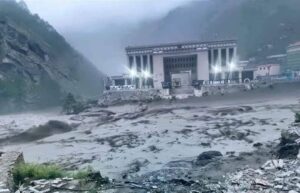
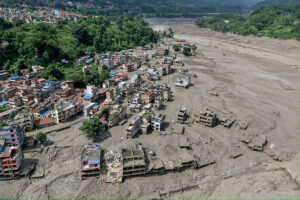
The flood didn’t stay in Rasuwa. It surged more than 70 kilometers downstream along the Trishuli River, hitting Nuwakot, Dhading, Gorkha, Chitwan, Tanahun, and Nawalparasi districts as well. Villages that had stood for generations were, in places, simply gone — wiped clean down to bare riverbed.
It’s one of the deadliest disasters Nepal has faced in years, and the scale of it is still becoming clear.
What caused the Rasuwa flood?
Early assessments point to a glacier-related event high in the mountains near the Nepal–China border, roughly 20 kilometers northeast of the Rasuwagadhi crossing. Nepal’s disaster management authority, working with satellite imagery, believes a snow-and-rock landslide triggered a sudden glacial flood in the Lhende River, which then poured into the Bhote Koshi and on into the Trishuli.
The collapse was powerful enough to register as a small earthquake — about magnitude 5.2 — picked up by seismic stations as far away as the United States and Germany. Scientists studying the event say the initial flood wave moved at extraordinary speed, covering the first 22 kilometers at an average of around 193 kilometers per hour. In other words, communities downstream had almost no warning before a wall of water, ice, mud, and boulders arrived.
This kind of event is sometimes called a glacial lake outburst flood, or GLOF. Nepal’s Himalayan region has dozens of glacial lakes that have grown unstable as glaciers melt and shrink, and events like this one are becoming more frequent, not less.
How many people were affected?
The numbers have shifted almost daily as search teams reach more remote areas, but the scale of loss is staggering. Within the first 24 hours, confirmed deaths climbed past 350, with hundreds more people unaccounted for across Nepal. On the Chinese side of the border, near the Gyirong trade crossing, there were also confirmed deaths and hundreds reported missing.
Among those still missing in the early days were dozens of security personnel — soldiers, police, and armed police officers — along with hydropower workers, customs staff, and both domestic and foreign tourists, including several Americans who were trekking or traveling through the region when the flood hit.
Infrastructure damage has been just as severe. Dozens of bridges were destroyed, including crossings that connected entire communities to the outside world. Close to 40 kilometers of road were damaged or washed away, cutting off villages and slowing rescue teams trying to reach the hardest-hit areas. Hydropower projects along the Trishuli corridor, along with local markets and the Rasuwagadhi dry port, sustained heavy damage, disrupting both electricity supply and cross-border trade with China.
The human side of the disaster
Behind every number is a family. UNICEF has reported that children are among the confirmed dead, and thousands more are now facing displacement, loss, or separation from family members. Aid workers have described flood-hit settlements buried under thick mud, homes half-submerged, and communities left without power, clean water, or access to medical care.
Health facilities serving children and families in the region were also damaged, adding another layer of difficulty to an already overwhelming situation. Search and rescue teams have had to work in genuinely dangerous conditions, with the constant risk of further landslides and secondary flooding as they comb through the wreckage.
How is Nepal responding?
Nepal’s government moved quickly to deploy security forces, including the Nepali Army, Nepal Police, and Armed Police Force, to affected districts. Helicopters have been used to airlift stranded survivors, including tourists and workers cut off by damaged roads, to safer ground. Displaced families have been sheltered in temporary sites, including army training centers repurposed as emergency shelters.
Humanitarian organizations moved in almost immediately. The Nepal Red Cross Society, which has volunteers across all 77 districts, has been distributing emergency supplies and supporting search efforts. UNICEF has sent medical tents, hygiene kits, therapeutic food for malnourished children, and mental health support teams, while also working to identify and reunite children separated from their families.
International support has followed too. Neighboring India offered assistance early on, and the United States signaled it was ready to help with humanitarian aid. Local hospitals and medical colleges in Kathmandu have sent rapid response medical teams to Rasuwa, Nuwakot, and Dhading to treat the injured.
Why does this keep happening in Nepal?
If this sounds familiar, it’s because Nepal has faced a string of severe flood and landslide disasters in recent years, including a major GLOF-related flood along the same Bhote Koshi corridor in July 2025, and devastating monsoon flooding across the country in September 2024 that killed well over 200 people.
Nepal’s geography puts it at the center of a growing risk. It’s home to thousands of glaciers and glacial lakes across the Himalayas, many of which are becoming less stable as temperatures rise. Add in steep terrain, monsoon rainfall, and communities that have historically settled along fertile riverbanks, and you get a landscape where a single glacial collapse can turn into a humanitarian catastrophe within minutes. Experts who study the region have long warned that early-warning systems and glacial monitoring need urgent investment — warnings that events like the Rasuwa flood make painfully real.
Frequently asked questions
When did the Rasuwa flood happen?
The flash flood struck on the morning of August 26, 2026, and its effects were still being assessed for days afterward as the water moved downstream.
What caused the Rasuwa flood?
A snow-and-rock landslide near the Nepal–China border is believed to have triggered a glacial flood in the Lhende River, which surged into the Bhote Koshi and Trishuli rivers.
Which districts were affected?
Rasuwa, Nuwakot, Dhading, Gorkha, Chitwan, Tanahun, and Nawalparasi districts in Nepal were all affected, along with areas near the Gyirong border crossing in Tibet, China.
How can people help flood victims in Nepal?
Established organizations such as the Nepal Red Cross Society and UNICEF are accepting donations and coordinating relief efforts on the ground, including shelter, clean water, medical care, and support for displaced children.
A region still finding its footing
It will take time — likely years — for Rasuwa and the surrounding districts to rebuild roads, bridges, homes, and livelihoods. For now, the immediate focus remains on search and rescue, getting aid to isolated communities, and supporting families who have lost everything in a matter of minutes.
Disasters like this are a reminder of how quickly life can change in mountain communities, and how much resilience it takes to face it. If you’re looking for ways to help, supporting trusted relief organizations working directly in Rasuwa, Nuwakot, and Dhading is one of the most meaningful things you can do right now.


