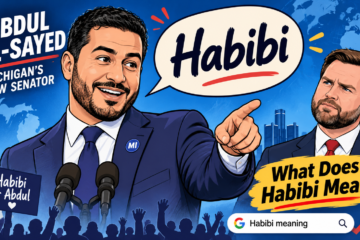
Quick answer: Abdul El-Sayed, a Sunni Muslim of Egyptian heritage, won Michigan’s United States Senate seat in November 2026 with strong support from the state’s large Shia community. One year earlier, Zohran Mamdani, a Shia Muslim, became mayor of New York City with the backing of a mostly Sunni Muslim population. Taken together, these two elections suggest that shared political goals are beginning to matter more than sectarian lines for many American Muslims.
Why El-Sayed’s Michigan Victory Matters Beyond Politics
On August 4, 2026, Abdul El-Sayed defeated Congresswoman Haley Stevens in Michigan’s Democratic Senate primary. He finished with 48.5 percent of the vote against 47.5 percent for Stevens, while Mallory McMorrow, who had already left the race, drew about 4 percent. He managed this despite facing a spending gap of more than eight to one and open opposition from party leaders. Three months later, on November 3, he defeated Republican Mike Rogers in the general election. He will succeed retiring Senator Gary Peters and becomes the first Muslim ever to serve in the United States Senate. Abdul El-Sayed wins Michigan Democratic Senate primary as voters pivot to the left +2
Most coverage treated the result as a win for the progressive wing of the Democratic Party. However, the Israeli think tank INSS argued in an August 2026 analysis that the election also reflects deep changes inside the American Muslim community. INSS noted that although most American Muslims are Sunni, Michigan, home to an estimated quarter of a million Muslims, also has a prominent Shia presence that likely supplied El-Sayed with a significant base of support even though he clearly identifies with the Sunni branch. The 2020 US Religion Census counted 241,828 Muslims and 127 mosques in Michigan. inssthearda
Who Is Abdul El-Sayed?
Early life and education
Abdulrahman Mohamed El-Sayed was born on October 31, 1984, in Rochester Hills, a Detroit suburb, to Egyptian immigrant parents. His father arrived in the United States in the late 1970s to pursue an engineering doctorate at Wayne State University. The family’s roots are in Alexandria, Egypt. He grew up in metro Detroit with his father and his stepmother, who comes from rural Gratiot County, Michigan, and he has often described his home as half Egyptian and half Midwestern. Who is Abdul El-Sayed, the first Muslim elected to the US Senate? +2
He graduated from the University of Michigan in 2007, completed a doctorate in public health at Oxford as a Rhodes Scholar in 2011, and received his medical degree from Columbia University in 2014. dailysabah
A career built in public health
In 2015, Detroit Mayor Mike Duggan appointed him as the city’s health director. At 30, he was the youngest health officer of any major American city, and his task was to rebuild a department that had been privatized during Detroit’s bankruptcy. He stepped down in 2017 to run for governor. He later returned to public service as director of Wayne County’s Department of Health, Human and Veterans Services from December 2022 until April 2025, overseeing services for 1.8 million residents in Michigan’s largest and most diverse county. He also hosts the podcast America Dissected and previously taught epidemiology at Columbia University. Who is Abdul El-Sayed, the first Muslim elected to the US Senate? +2
Political journey
El-Sayed’s first major campaign came in 2018, when he ran for the Democratic nomination for Michigan governor and finished second to Gretchen Whitmer with roughly 30 percent of the vote. He lives in Ann Arbor with his wife Sarah and their two daughters. freepressjournalCBS News
The 2026 Senate race
His Senate platform called for universal health care, action on medical debt and higher taxes on billionaire wealth. The campaign turned bitter. Rogers, a former FBI agent and Army veteran, attacked El-Sayed over his past comments on Israel and Iran and his ties to streamer Hasan Piker. President Trump repeatedly referred to him as Mohamed and called him a jihadist, something El-Sayed answered directly in his victory speech. Even Haley Stevens, his primary rival, endorsed Rogers. Despite all of this, El-Sayed took the stage at 1:30 a.m. on election night to claim victory while leading 52 percent to 46 percent. Abdul El-Sayed defeats Mike Rogers in 2026 Michigan Senate election +4
How Diverse Is the American Muslim Community?
Pew Research Center’s 2017 survey found that 55 percent of American Muslims identify as Sunni, 16 percent as Shia, 4 percent with other groups such as the Ahmadiyya or the Nation of Islam, and 14 percent with no specific tradition. Respondents traced their origins to at least 75 countries, and Muslims are younger and more racially diverse than the general American population. The Institute for Social Policy and Understanding describes American Muslims as the only faith community in the country with no majority race. The 2020 US Religion Census put the total Muslim population at about 4.45 million, or roughly 1.3 percent of Americans. Numbers, Facts and Trends Shaping Your World +3
Michigan: A Sunni Candidate in a Shia Stronghold
Dearborn, just outside Detroit, sits at the center of this story. The city’s Islamic Center of America is the largest mosque in North America and the oldest purpose built Shia mosque in the United States. Because of its large Shia Arab population, mostly of Lebanese origin, Dearborn is often called the heart of Shiism in America. Michigan’s Arab and Muslim residents are mainly of Lebanese and Iraqi background, with Iranian and South Asian communities as well, and many have been citizens for generations. Islamic Center of America +2
This Shia heartland turned out for a Sunni candidate. Record numbers of voters in Dearborn and Dearborn Heights backed El-Sayed in the primary, handing him a margin large enough to overcome Stevens’s advantage across the rest of the state. In the general election, the AP Voter Poll found that about nine in ten Muslim voters and about seven in ten voters of Arab or Middle Eastern descent supported him. Muslims make up only about 2 percent of Michigan’s voters, but the advocacy group Emgage estimates there are more than 200,000 registered Muslim voters in the state. Dearborn Mayor Abdullah Hammoud stressed that El-Sayed’s policies, not only his identity, mobilized the city’s Arab and Muslim residents. Arab American voters reshape Michigan’s political landscape +4
How Sunni and Shia Relations in America Differ From the Middle East
INSS argues that relations between the two branches in the United States have followed a very different path from the Middle East. In the 1960s and 1970s, when the community was still forming, Sunnis and Shias built mosques and community institutions together. Later waves of immigration allowed each group to create separate institutions and drift apart. The attacks of September 11 brought the branches closer in the fight against Islamophobia, while the Arab Spring heightened tensions again. inss
Friction has surfaced at times, though rarely with the violence seen abroad. In January 2007, after the execution of Saddam Hussein, vandals attacked two Shia mosques and several businesses in Detroit. The response was quick. Sunni and Shia leaders in Michigan signed a pact committing themselves to speak out against conflict between the two sects. That same year, major Sunni and Shia leaders gathered in Chicago and announced a Muslim Code of Honor to promote respect and cooperation. Source: Reuters +2
The New York Test: Zohran Mamdani and a Sunni Majority
Zohran Mamdani was born in Kampala, Uganda, on October 18, 1991. A Khoja Shia Ithna-Asheri, he was elected mayor of New York City after defeating former governor Andrew Cuomo and Republican Curtis Sliwa. He has said plainly that he is a Shia Muslim who was raised in an interfaith family. Many New Yorkers know him as the city’s first Muslim mayor, but he is also its first Shia mayor, a minority tradition within Islam. Thursday, November 5, 2026 +3
As he prepared to take office on January 1, 2026, Shia New Yorkers told NBC News that his election was already reshaping conversations about faith and belonging, even though differences over prayer and religious commemorations persist. For them, his victory was a rare moment of seeing someone from their community embraced broadly by the city’s wider Muslim population. The connection between New York and Michigan was visible too. Mamdani publicly congratulated El-Sayed after his Michigan primary win. zohran mamdani muslim new yorkers shia rcna246995 +2
Is Political Activism Bridging the Divide?
INSS concludes that, especially since October 7, growing Muslim political activism may be bridging Sunni and Shia differences in America. The rise of figures like Mamdani and El-Sayed, in its reading, reflects a broader process in which a shared Muslim identity and common political interests, particularly support for the Palestinians and sharp criticism of Israel, are taking precedence over sectarian and ethnic divides. inss
The results of 2025 and 2026 support that view, at least at the ballot box. A Shia mayor won with Sunni votes in New York. A Sunni senator won with Shia votes in Michigan. Whether this cooperation holds beyond election season, and whether it survives future disagreements over Iran, Lebanon or domestic issues, is the real test still ahead.
Frequently Asked Questions
Is Abdul El-Sayed Sunni or Shia?
He identifies clearly with the Sunni branch of Islam, according to INSS. inss
Is Zohran Mamdani a Shia Muslim?
Yes. He is the first Shia Muslim to serve as mayor of New York City. ny1
How many Muslims live in Michigan?
The 2020 US Religion Census recorded 241,828 Muslims in Michigan. thearda
Who was the first Muslim elected to the US Senate?
Abdul El-Sayed’s November 2026 victory made him the first Muslim American elected to the United States Senate. Wikipedia