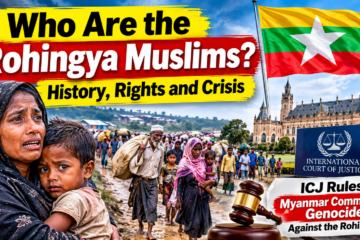
On 19 November 2026, the International Court of Justice in The Hague ruled by nine votes to six that Myanmar committed genocide against the Rohingya in northern Rakhine State. The court had never before held a state responsible for committing genocide. The judgment is final, binding on The Gambia and Myanmar, and cannot be appealed, UN News reports.
The legal headline is settled. What the Myanmar genocide ruling changes for more than a million displaced Rohingya is far less clear.
How the case reached The Hague
The trigger was August 2017. After the Arakan Rohingya Salvation Army hit about 30 police posts and an army base, Myanmar’s armed forces launched an offensive, and refugees later described mass killings, gang rapes and burned villages, Reuters reported. More than 730,000 Rohingya fled to Bangladesh. Figures vary by outlet, and UN News puts the exodus at some 700,000.
A UN fact-finding mission concluded in 2019 that the military committed genocidal acts, as Al Jazeera recalls. The Gambia filed its case that November. Aung San Suu Kyi, then Myanmar’s civilian leader, appeared in person and called the claims incomplete and misleading. In January 2020 the court still ordered emergency measures to protect the Rohingya.
What the judges found
Presiding judge Yuji Iwasawa took about three hours to read the decision. The court concluded that Myanmar’s security forces killed thousands of Rohingya civilians, carried out widespread sexual violence, used extreme violence against children and attacked people as they fled toward Bangladesh, according to Al Jazeera. It put the number killed at an estimated 10,000, per UN News.
The court tied those acts to Article II of the Genocide Convention: killing, causing serious bodily or mental harm, and imposing measures meant to prevent births. The murder of infants, Iwasawa said, supported the last of those findings.
Villages tell the same story. Nearly 400 of the roughly 1,000 villages in three northern Rakhine townships were partly or fully destroyed, and cleared land was often built over with security installations and new settlements, the UN account of the judgment says. An Al Jazeera explainer adds that the court found senior officials spread hate speech casting the Rohingya as subhuman.
The court also heard three witnesses from the villages of Min Gyi, Chut Pyin and Maung Nu. Myanmar called one witness of its own, who described an attack in which ARSA fighters allegedly killed around 100 civilians, UN News records.
Myanmar’s defence was that it answered attacks by the Arakan Rohingya Salvation Army on police posts. CNN reported that the judges rejected this because the military did not distinguish militants from civilians.
Not every Gambian claim succeeded. The court rejected the argument that Myanmar directly and publicly incited private individuals to commit genocide. It did find that Myanmar failed to prevent genocide, failed to punish it, and failed to preserve evidence as a 2020 court order required.
Why no state had been found guilty before
Genocide needs more than mass killing. A court must find specific intent to destroy a group in whole or in part, a bar international lawyer Toby Cadman called extremely high. He noted that the ICJ had never before found a state held that intent.
The record shows how rarely it happens. In 2007, the court found Serbia broke the Convention by failing to prevent the Srebrenica genocide, but ruled Serbia did not commit it. In 2015, it dismissed both sides’ claims in Croatia v. Serbia because neither proved intent, UN News notes. Al Jazeera counts Thursday’s ruling as only the fourth time since the Holocaust that an international court has found genocide.
Here the judges relied on inference. They found that the only reasonable explanation for the pattern of violence was an intent to destroy a substantial part of the Rohingya. The Mail & Guardian adds a detail lawyers will study: the court said genocidal intent can sit alongside other aims, so a stated military objective does not by itself rule it out. Six judges voted the other way on the genocide finding itself.
What the Myanmar genocide ruling orders
The orders are long. Myanmar must stop ongoing violations by passing legislation that gives effect to the Convention, investigate and, where warranted, prosecute those reasonably suspected of the crimes, and give guarantees it will not happen again. It must also allow safe, voluntary and dignified return and the reunification of families, and compensate the Rohingya.
The court did not set a sum. Compensation is left to a later phase, and Myanmar has two years to report on the restitution measures it adopted, which points to a November 2028 deadline, according to Al Jazeera.
Rohingya advocates want more than a number. Matthew Smith of Fortify Rights said reparations must be shaped by survivors, must not be confused with humanitarian aid, and should include restored citizenship and land, according to the same Al Jazeera explainer.
Can anyone make Myanmar comply?
Not easily. Reuters notes that ICJ judgments bind the parties, but the court has limited means of enforcement and cannot convict individuals or issue arrest warrants. This judgment settles the responsibility of a state, not the guilt of any commander. The Gambia could take the matter to the UN Security Council, Al Jazeera says.
Cadman added that much now depends on whether the matter reaches the Security Council and whether sanctions or other remedies follow. Amnesty International said it hoped the ruling would start a long overdue process of accountability, with all crimes under international law investigated.
Past behaviour gives little comfort. The court found Myanmar had already fallen short of the 2020 order to preserve evidence.
The ground reality is worse. Reuters reports that over 1.3 million Rohingya remain displaced across South and Southeast Asia, including 1.2 million in Cox’s Bazar, Bangladesh. Fighting between the military and the Arakan Army has spread in Rakhine since November 2023. Myanmar said in August it had verified 308,797 people in Bangladesh camps as former Rakhine residents, but said repatriation would start only once security improved. Earlier repatriation plans in 2018 and 2019 produced no returns.
Michael Becker, a former ICJ legal officer, told Al Jazeera that even sweeping relief is unlikely to reach people soon, given the political conditions inside Myanmar.
Reactions and the Gaza question
Bangladesh’s foreign ministry welcomed the verdict and said Myanmar is legally bound to comply. UN Secretary-General António Guterres called it a powerful recognition of the victims. AP reported no immediate reaction from Myanmar’s delegation or government. At the January 2026 hearings, Myanmar told the court the case rested on unsubstantiated allegations.
The UN chief also said the judgment would be studied carefully within the United Nations, and that the Genocide Convention must be respected by all.
Observers are also reading the judgment for clues about South Africa’s case against Israel over Gaza. The court made no finding about Israel, the Mail & Guardian stresses. In that case, South Africa’s written reply is due on 22 November 2027 and Israel’s rejoinder on 22 May 2029.
Quick answers
Who brought the case? The Gambia, in November 2019, backed by the 57-member Organisation of Islamic Cooperation. Eleven other countries joined on questions of treaty interpretation.
Why are the Rohingya stateless? Myanmar calls them illegal migrants from Bangladesh, and a 1982 citizenship law left most of them without citizenship, per Al Jazeera’s explainer. About 1.4 million lived in Myanmar before the 2017 displacement.
What should readers watch next? The two-year report. When it lands, check the filings on the ICJ’s judgment page and whether Myanmar names a compensation figure or only a process.